The iPhone Duo is real, it’s $1,999, and preorders open next Friday
Apple’s first foldable seems to have beaten the crease better than almost anyone expected. The price is a different story, and so are a few of the compromises.
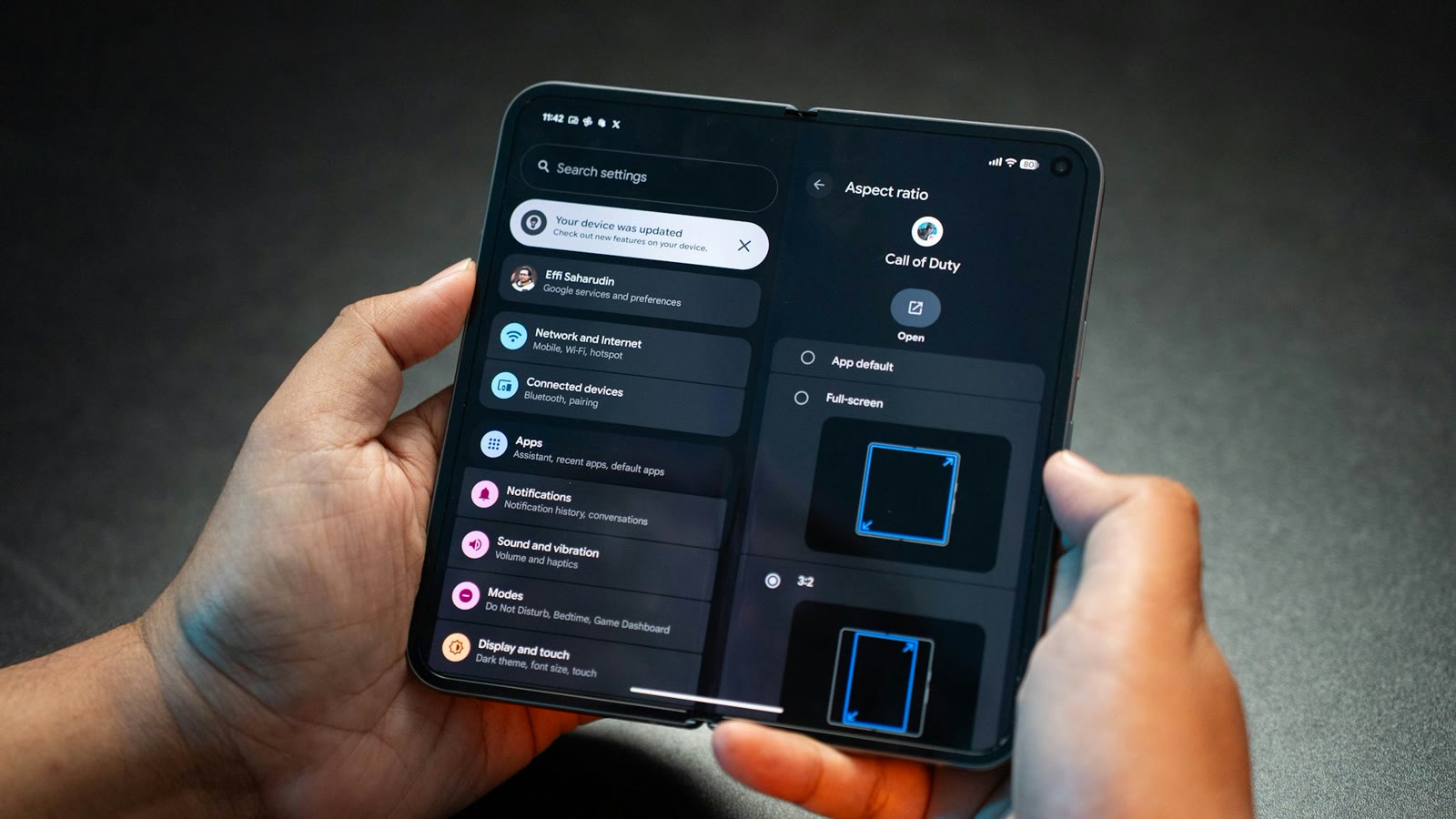
Not the iPhone Duo: an Android book-style foldable, shown for scale and shape. Photo: Amanz / Unsplash
A month ago we wondered whether Apple could make foldables feel inevitable. Now we have an answer to the first half of that question. Apple introduced the iPhone Duo on September 9, and it is a passport-shaped, book-style foldable with a 5.4-inch outer screen and a 7.6-inch inner screen. Preorders open Friday, October 16 at 5 a.m. PT, and the phone lands in stores on October 23 in the US and more than 70 other countries and regions.
Apple CEO John Ternus called it “the most transformational change to iPhone since the original.” That line is pure keynote. But after reading through Apple’s spec sheet and the first hands-on reports, it isn’t a crazy thing to say.
The crease: mostly handled
The biggest surprise is the screen surface. Apple put a matte nano-texture layer on the inner display, so it reflects less light and the fold is much harder to see. MacRumors said the crease is still visible in some lighting but called it better hidden than Samsung’s. Tom’s Guide said it could see the crease but couldn’t feel it. That isn’t “gone,” but it beats the glossy-glass approach every other foldable has used. The real question is how it looks after a year of opening and closing, and nobody can answer that yet.
The software sounds just as deliberate. Apple moved the Dock, app controls, and even the Dynamic Island to the side of the screen. Split View lets you run two apps side by side on an iPhone for the first time, and StandBy works when the phone is folded into a tent, even if it isn’t charging. MacRumors notes the split is fixed at 50/50 with no resizing, and Tom’s Guide points out that Samsung’s Galaxy Z Fold 8 runs three apps at once. So this is a first version, not a finished one.
The price: very much not handled
US pricing starts at $1,999 for 256GB. After that it’s $2,199 for 512GB, $2,599 for 1TB, and $3,199 for 2TB. According to Tom’s Guide, the Galaxy Z Fold 8 costs $100 less and is thinner and lighter. The Duo measures 5.2mm open versus 4.5mm and weighs 254 grams versus 201. In return, Apple gets an IP68 dust and water rating (Tom’s Guide says Samsung’s Fold is IP48), a grade 5 titanium frame, MagSafe built in, and Apple Pencil support coming later this year.
Some trade-offs will matter more than Apple’s marketing suggests. There are only two rear cameras, a 48MP main and a 48MP ultrawide, and the “2x telephoto” is a crop from the main sensor. Unlocking uses Touch ID in the side button, not Face ID. The phone is eSIM-only worldwide. Battery claims sound good on paper, with up to 31 hours of video on the inner screen and 44 on the outer one thanks to a battery in each half. Those are Apple’s numbers, though, and nobody has run independent tests yet.
Our take
From everything published so far, Apple’s first foldable seems to have done what Android makers took several generations to manage: it treats the crease and the software as the main event, not as fine print. That’s the reboot we argued the category needed. But $1,999 isn’t mainstream pricing, and with only two apps on screen, no telephoto, and the extra weight, this is a first-generation device even with Apple’s polish on it.
If you’re already curious about foldables and you live in Apple’s ecosystem, the Duo is the easiest one to justify. If you’ve been waiting for foldables to get cheap, this isn’t that phone. Either way, wait for full reviews before October 16. Hands-on time at a launch event isn’t a week in a pocket.